


When it comes to maximising nutrition in your daily diet, microgreens stand out as a powerhouse option, especially when compared to cooked mature vegetables.
These tender, young greens – harvested just 7–14 days after germination – are bursting with flavour and deliver up to 40 times more nutrients than their fully grown counterparts.
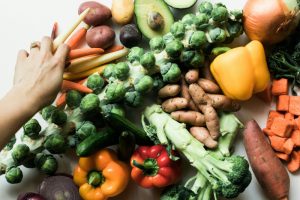 Unlike mature vegetables, which often lose vital nutrients during prolonged cooking, microgreens are typically enjoyed raw or with minimal heat, preserving their natural goodness. This makes them an ideal choice for health-conscious individuals seeking efficient, sustainable ways to boost their intake of vitamins, minerals, and antioxidants.
Another important advantage of microgreens is that they are typically grown in highly controlled, clean environments without the use of pesticides, herbicides, or synthetic chemicals. At Skye Mountain we select organic, untreated seed and our growers (you) cultivate the plants indoors or in protected spaces, which means the crop is safe, fresh, and free from chemical residues. Because the plants are harvested so young, they don’t face the same pest and disease pressures as mature field-grown vegetables, making them one of the purest and most naturally grown forms of fresh produce available.
In this guide, we’ll explore how microgreens excel in nutrient density and bioavailability, while also highlighting their cost-effectiveness. Whether you’re growing your own at home or incorporating them into meals, microgreens offer a fresh, eco-friendly alternative to traditional veg. For more on the benefits and varieties, check out our Ultimate Guide to Microgreens.
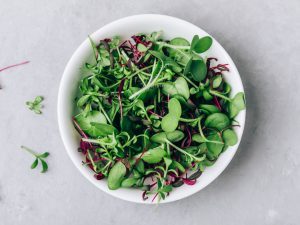
Microgreens are typically eaten raw, which preserves heat-sensitive nutrients (e.g., vitamin C, certain polyphenols) and enzyme systems such as myrosinase in brassicas that generate sulforaphane. A very light cook (about 1–2 minutes) – quick steam or brief stir-fry – can improve bioavailability of some nutrients (especially fat-soluble carotenoids like β-carotene and lutein) by softening cell walls; a little oil further aids absorption.
In contrast, traditional cooking of mature veg (long boiling/steaming) often causes substantial nutrient losses through heat degradation and leaching into the cooking water, particularly for vitamin C, anthocyanins, and sulforaphane precursors.
Net effect: the bioavailability of microgreens is often higher because they’re eaten raw or only lightly cooked, and because their young tissues are naturally tender and nutrient-dense. This approach not only retains more nutrition but also supports overall wellness, from immune health to detoxification – learn more in our pillar on Microgreens for Health and Wellness.
Below, we focus on the microgreens that excel on both nutrition and price efficiency: Broccoli, Red Cabbage, Mustard, plus worthy additions Radish (another strong brassica) and Sunflower Shoots (Vitamin E & protein). Each row highlights the specific nutrient where the microgreen comparatively shines. Mature-veg equivalents are given as cooked weights to reflect real-world eating.
These varieties are easy to grow at home using our sustainable kits, ensuring you get the freshest, most potent greens possible.
Discover how to start with our Complete Beginner’s Guide to Growing Microgreens.
- Pricing assumption (your price): Microgreens at £0.06 per gram → £1.80 per 30 g.
- Mature veg (cooked weight) averages (UK, 2025): broccoli £2.00/kg; red cabbage £1.50/kg; mustard/spring greens £2.50/kg; radish root £2.00/kg; mixed leafy greens (sunflower proxy) £2.50–£3.00/kg.
- Cooking losses & bioavailability: vitamin C and anthocyanins can drop 30–60%+ with boiling; sulforaphane yield collapses if myrosinase is inactivated; carotenoids are relatively heat-stable and better absorbed with a little oil.
| Microgreen | Key Nutrient | Relative Concentration vs Mature | Cooked Mature Equivalent to Match ~30 g Micros | Cost of Mature Equivalent | Cost of 30 g Micros (at 6p/g) |
|---|---|---|---|---|---|
| Broccoli | Sulforaphane (via myrosinase) | ~40× higher potential | ~2–3 kg cooked broccoli | £4.00–£6.00 | £1.80 |
| Red Cabbage | Vitamin C | ~6× higher | ~0.3 kg cooked red cabbage | ~£0.45 | £1.80 |
| Red Cabbage | Vitamin E / Vitamin K | ~40–69× higher | ~2–3.5 kg cooked red cabbage | £3.00–£5.25 | £1.80 |
| Mustard Greens | Glucosinolates (isothiocyanates) | ~20–30× higher | ~1–1.5 kg cooked mustard/spring greens | £2.50–£3.75 | £1.80 |
| Radish (Rambo/Daikon/Purple) | Glucosinolates | ~10× higher | ~0.5–0.6 kg cooked radish | ~£1.00–£1.20 | £1.80 |
| Sunflower Shoots | Vitamin E (α-tocopherol) | Higher than many leafy greens | ~0.6–1.0 kg cooked mixed greens (proxy) | ~£1.50–£3.00 | £1.80 |
Practical Guidance
- Use microgreens raw (salads, on plated dishes, folded in at the end). If heating, keep it to about 1–2 minutes.
- For carotenoid-rich micros (e.g., mustard, sunflower), include a small amount of oil to improve absorption.
- When cooking mature brassicas, short steaming beats boiling; if you do boil, use the cooking liquid (soups/sauces).
- To restore sulforaphane formation in cooked brassicas, add a pinch of raw mustard/cress at serving to supply myrosinase.
- For pregnancy-safe options, prioritise hygiene and mild varieties – read our dedicated pillar on Microgreens During Pregnancy.
Key takeaway: At your price point of 6p/g, microgreens – especially Broccoli, Red Cabbage, and Mustard – are not only more concentrated and bioavailable, they are often cheaper per target nutrient than eating the equivalent kilos of cooked mature veg.
Radish and Sunflower Shoots add variety and specific strengths (glucosinolates; vitamin E & protein) while remaining competitive. Growing your own with Skye Mountain’s eco-friendly systems, like our Microgreen Subscription Kits, ensures freshness and sustainability.
Ready to elevate your nutrition? Browse our shop today and start harvesting in just days.